
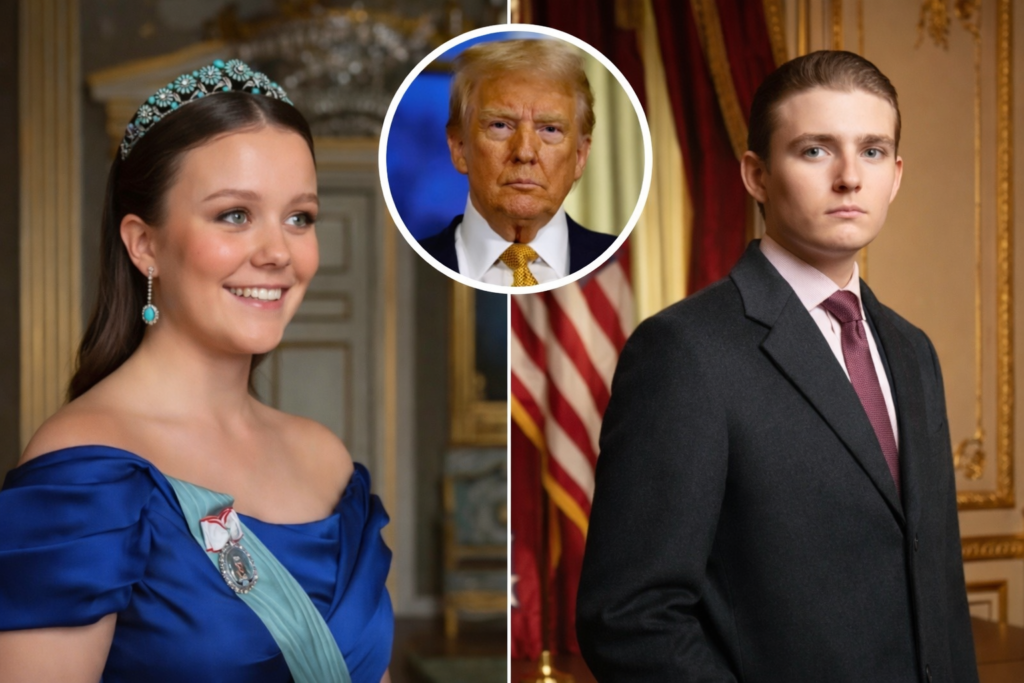

In the fast-moving world of social media, even a passing joke can ignite a global conversation. That was the case when Donald Trump recently drew viral attention after jokingly suggesting that his son, Barron Trump, should marry Princess Isabella of Denmark as a way to secure Greenland as part of a “dowry.” The comment, clearly delivered in jest, spread rapidly across platforms, spawning memes, satire, and widespread online discussion within hours.
While the remark was never intended as a serious proposal, its reach highlights how modern political discourse has evolved. Today, humor, exaggeration, and offhand comments can travel farther and faster than formal speeches or policy statements. In Trump’s case, a single humorous line was enough to blend geopolitics, royal intrigue, and internet culture into one viral moment.
From Joke to Viral Moment
The suggestion immediately caught the attention of social media users, who were quick to remix the idea into memes and satirical posts. Images imagining royal weddings, fictional diplomatic ceremonies, and playful takes on international relations flooded platforms like X, Instagram, and Facebook. What might once have been a throwaway joke at a private event became a public spectacle shaped by collective online creativity.
This kind of viral reaction is not unusual in the digital age, particularly when it involves high-profile political families. Names like Trump, combined with royalty and a long-standing geopolitical curiosity like Greenland, create a perfect storm for engagement. The internet thrives on unexpected combinations, and this moment delivered exactly that.
Not Policy, but Performance
Political analysts were quick to point out that the remark was symbolic and humorous rather than an actual policy suggestion. Trump has long been known for using exaggerated or unconventional statements to command attention, often blurring the line between political messaging and entertainment. In this case, the comment functioned less as a geopolitical idea and more as a cultural performance.
Experts note that such remarks should be understood in context. Public figures, especially those with strong media instincts, are often aware of how quickly humor can travel online. A joke, even an absurd one, can dominate headlines and social feeds, keeping a public figure at the center of conversation without requiring formal announcements or press releases.
Media Coverage and Public Reaction
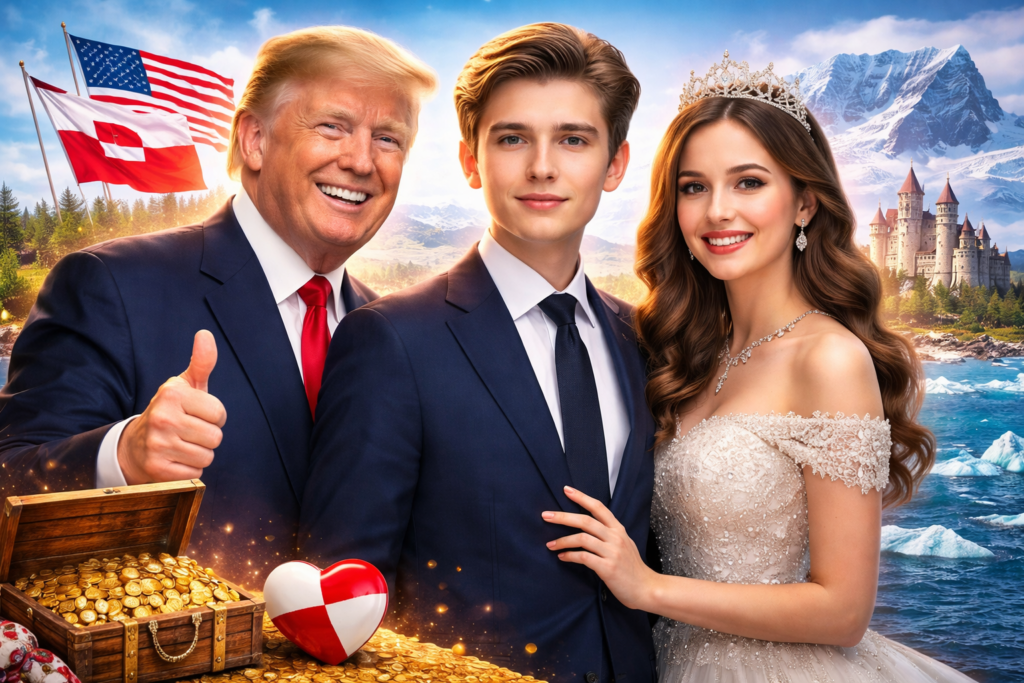
Media outlets largely framed the story through the lens of humor and surprise. Coverage emphasized the unexpected nature of the comment rather than treating it as a serious diplomatic statement. Headlines focused on the viral response, the memes, and the broader trend of politics intersecting with pop culture.
Public reaction followed a similar pattern. Many users responded with laughter, sharing jokes and lighthearted commentary. Others used the moment to debate the limits of political humor and whether such remarks trivialize serious global issues. Still, the dominant tone online remained playful rather than critical.
This mix of reactions reflects the changing nature of public discourse. Political stories are no longer confined to policy analysis or ideological debate. Instead, they often exist in a hybrid space where entertainment, satire, and commentary overlap.
Politics in the Age of Virality
The episode offers a clear example of how politics now operates within the logic of viral media. Engagement is driven not only by substance but by shareability. Humor, irony, and absurdity are powerful tools in capturing attention, especially in crowded digital environments where countless stories compete for visibility.
For younger audiences in particular, memes and satire often serve as entry points into political awareness. A joke about Greenland and royal marriages may seem trivial, but it can spark curiosity, discussion, and broader engagement with political figures and global affairs.
At the same time, experts caution that this blending of entertainment and politics comes with trade-offs. While humor can make politics more accessible, it can also blur important distinctions between serious policy debates and performative commentary.
What This Moment Reveals
Ultimately, the viral spread of Trump’s joke says as much about modern media culture as it does about the comment itself. It demonstrates how quickly narratives form online, how audiences participate in shaping them, and how public figures remain central to the attention economy.
The story also underscores a broader reality: political communication today is not limited to official channels. A single humorous remark can travel farther than carefully crafted statements, especially when it taps into internet culture’s love for irony and spectacle.
In that sense, the Greenland joke is less about diplomacy and more about how politics is consumed in the digital age. It shows how humor can drive engagement, spark conversation, and momentarily unite audiences across ideological lines through shared amusement.
Final Thoughts
As politics and entertainment continue to intertwine, moments like this are likely to become even more common. Whether viewed as harmless fun or a reflection of deeper shifts in public discourse, the incident highlights the growing influence of viral culture on political narratives.
In a world where memes can shape conversations as powerfully as speeches, understanding the role of humor has become essential. And for better or worse, stories like this remind us that in modern politics, sometimes a joke can travel farther than any policy proposal.