
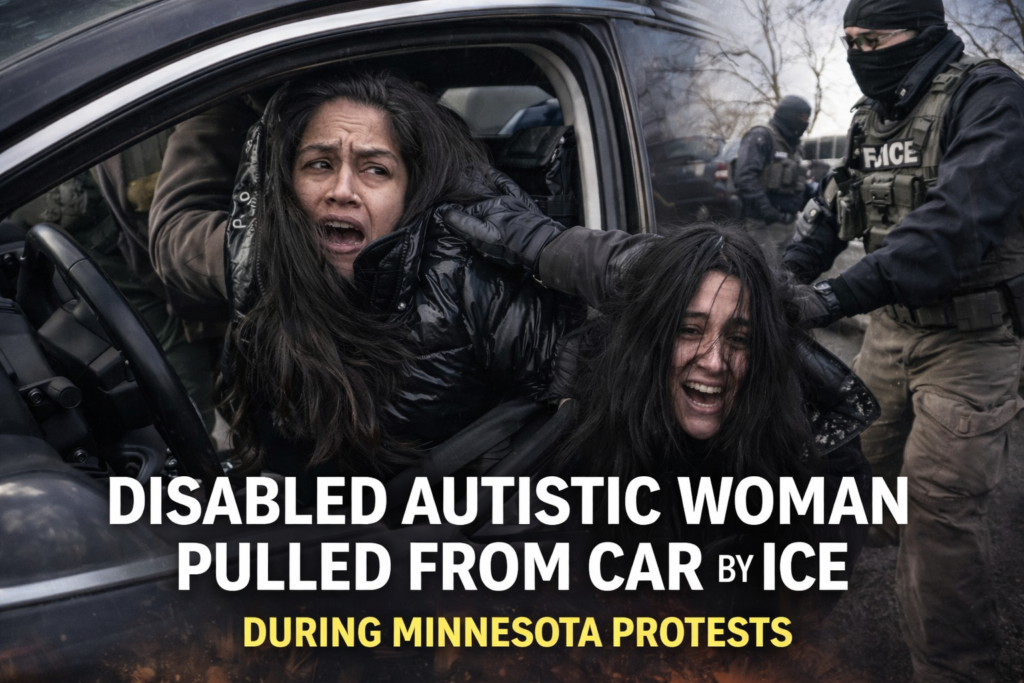

A disturbing incident involving a disabled autistic woman and federal immigration officers has sparked outrage during ongoing protests in Minnesota. According to recent accounts from witnesses, advocates, and local organizers, the woman was pulled from her car by ICE agents while protests were taking place nearby. The incident has raised serious questions about the use of force, treatment of disabled individuals, and the role of federal agencies during public demonstrations.
The woman, whose name has not been widely released to protect her privacy, is reported to be autistic and living with physical disabilities. People who were present say she was inside a vehicle when ICE agents approached and forcibly removed her. Video clips and photos shared online show a chaotic scene, with bystanders shouting that the woman was disabled and needed medical care.
Confusion and Fear at the Scene
Witnesses described the moment as sudden and frightening. Several people said the woman appeared overwhelmed and distressed as agents pulled her from the car. Protesters nearby tried to alert officers that she was autistic and had difficulty communicating, but those warnings were allegedly ignored.
Advocacy groups say this is a common and dangerous situation for people with autism, especially in high-stress encounters with law enforcement. Loud commands, physical force, and rapid movements can trigger panic or shutdown responses, making compliance difficult or impossible.
The woman was later taken into custody. As of the latest updates, her legal status and medical condition remain unclear, and her family and lawyers are seeking answers.
ICE Response and Official Statements
ICE has acknowledged an encounter involving a woman during operations in Minnesota but has not confirmed all details described by witnesses. The agency stated that officers were conducting enforcement activity related to public safety concerns and said the incident is under internal review.
ICE officials have not yet addressed why agents continued to use force after bystanders identified the woman as disabled. Civil rights lawyers say that distinction is critical, as federal officers are required to adjust their actions when dealing with people who have known disabilities.
Calls for body-camera footage and full documentation of the incident are growing louder.
Disability Advocates Demand Accountability
Disability rights organizations responded quickly, calling the incident deeply troubling. Advocates argue that this case highlights a long-standing failure by law enforcement agencies to properly train officers on how to interact with autistic and disabled individuals.
They stress that autism is not always visible and that many autistic adults may struggle with verbal communication or understanding commands under stress. Pulling someone from a car without recognizing those limitations, they say, can cause physical harm and lasting trauma.
Several national disability groups have now called for an independent investigation and immediate release of all video evidence.
Protests Grow as Anger Spreads Online
The incident has fueled anger at protests across Minnesota, where immigration enforcement was already a sensitive issue. Demonstrators have linked the woman’s treatment to broader concerns about ICE tactics, especially during periods of civil unrest.
On social media, the story spread rapidly. Many users expressed shock that a disabled woman could be handled this way, while others demanded suspension of the officers involved until the investigation is complete.
The case has also renewed debate about whether federal immigration agents should be involved in protest-adjacent operations at all.
A Larger Pattern of Concern
Legal experts say this incident fits into a wider pattern of clashes between ICE and vulnerable communities. Past cases across the country have raised similar concerns about the treatment of people with disabilities, mental health conditions, or limited English skills during enforcement actions.
Civil rights attorneys note that even when individuals are not the target of an arrest, aggressive enforcement can have devastating consequences. They argue that agencies must prioritize de-escalation and disability awareness, especially in public settings.
What Happens Next
As pressure mounts, several Minnesota lawmakers have called for transparency and oversight. Requests have been made for a full timeline of the incident, medical records related to the woman’s condition after the arrest, and clarification on why officers proceeded as they did.
For the woman at the center of the case, advocates say the focus must remain on her health, safety, and legal rights. For the public, the incident has become a flashpoint in a larger conversation about accountability, disability justice, and the limits of enforcement power.
The investigation is ongoing. Until clearer answers emerge, the incident continues to resonate as a stark reminder of how quickly vulnerable people can be harmed when systems fail to recognize their needs.



Who would believe the bystanders she was disabled, The way the Democrats Lie!! What did she do, Can only imagine..Probably tried to run an officer over like Good..